As an Amazon Associate we earn from qualifying purchases. This post contains affiliate links, and we may earn a commission at no extra cost to you.
PSA authentication is an opinion, rendered by people who have seen a lot of signatures, backed by a company willing to put its name and a guarantee behind that opinion. Prices start at $10 for a single signature and climb to $500 depending entirely on who signed the thing.
That first sentence is the part most guides skip. Authentication is not a lab test with a yes or no readout. It is expert judgment, documented and made checkable by a third party, and understanding that shapes every other decision you make about whether to send an item in.
PSA and PSA/DNA are not two companies
The naming trips up almost everyone new to this.
PSA grades trading cards. PSA/DNA authenticates autographs and signed memorabilia. Same company, two service lines, two different things happening to your item and two different numbers on the other end.
A PSA-graded card in a slab has a cert number tied to a condition grade. A PSA/DNA authenticated autograph has a cert number tied to a signature opinion. If you send a signed card in and want both, that is a third thing called Dual Grading, and it costs the sum of both services rather than one flat fee.
Getting this wrong is the most common reason a PSA cert lookup returns nothing useful. People search the wrong database for the number in their hand.
What actually happens to your item
PSA publishes its examination process, and it is worth reading before you assume anything about how the call gets made.
According to PSA’s own authentication page, authenticators run ink analysis, autograph structure analysis, object evaluation, and side-by-side comparisons against known exemplars. On harder items they may bring in a video spectral comparator, which reads how ink behaves across wavelengths the eye cannot see.
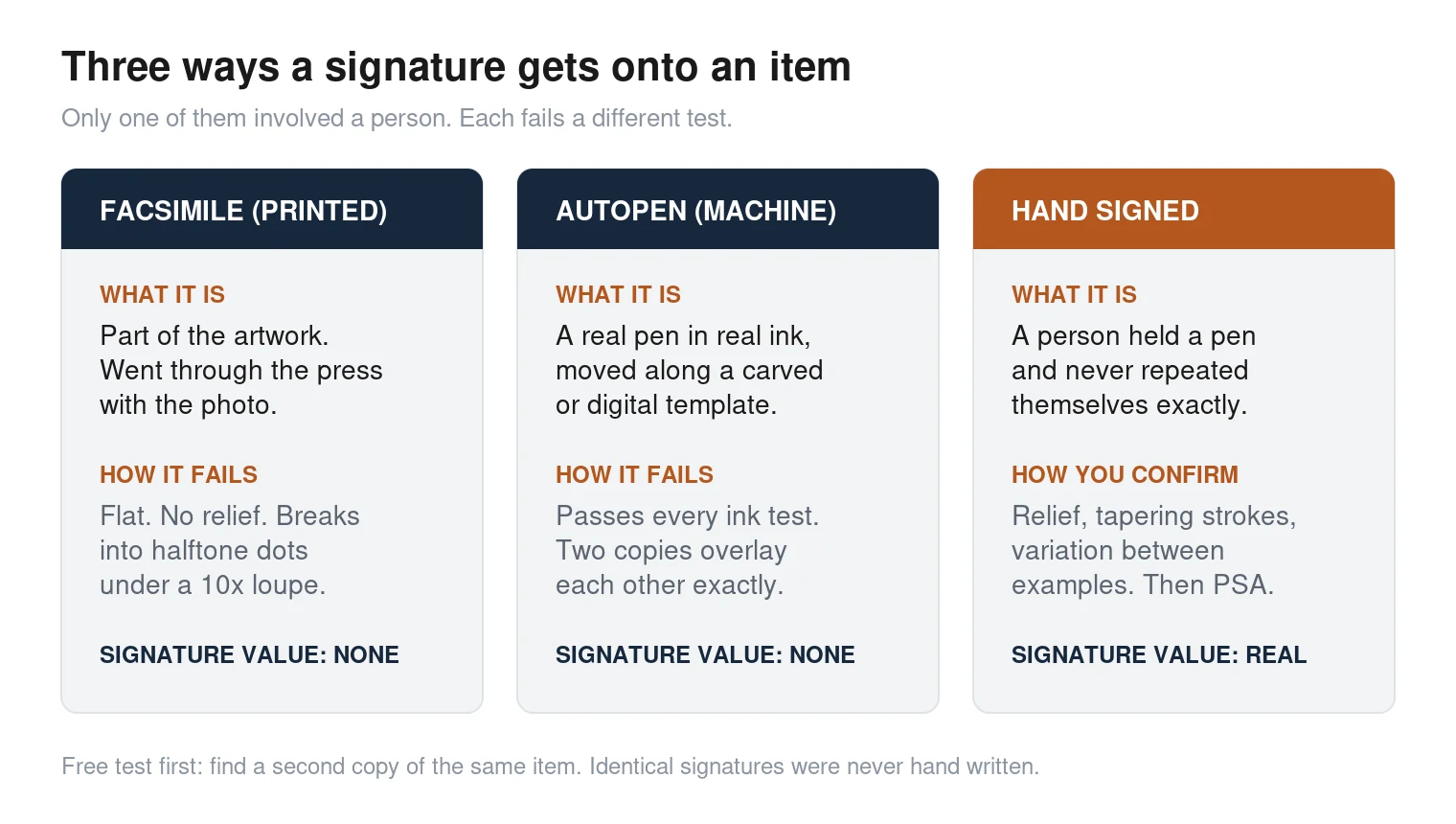
Four things, and notice what three of them have in common. Ink analysis, object evaluation, and spectral comparison are all about the physical item. Only structure analysis is about the shape of the signature.
That ordering is the whole reason authentication beats eyeballing a photo. A good forger can copy a shape. Copying the way ink sat on a specific paper stock in 1974 is a much harder problem, and it is where most fakes fall apart.
PSA says it has certified over 35 million collectibles across sports, history, and entertainment. Take that as a scale claim rather than an accuracy claim. Volume tells you they have seen a lot of exemplars, which matters, and it also tells you your item is one of many moving through a queue.
The real pricing, and where it jumps
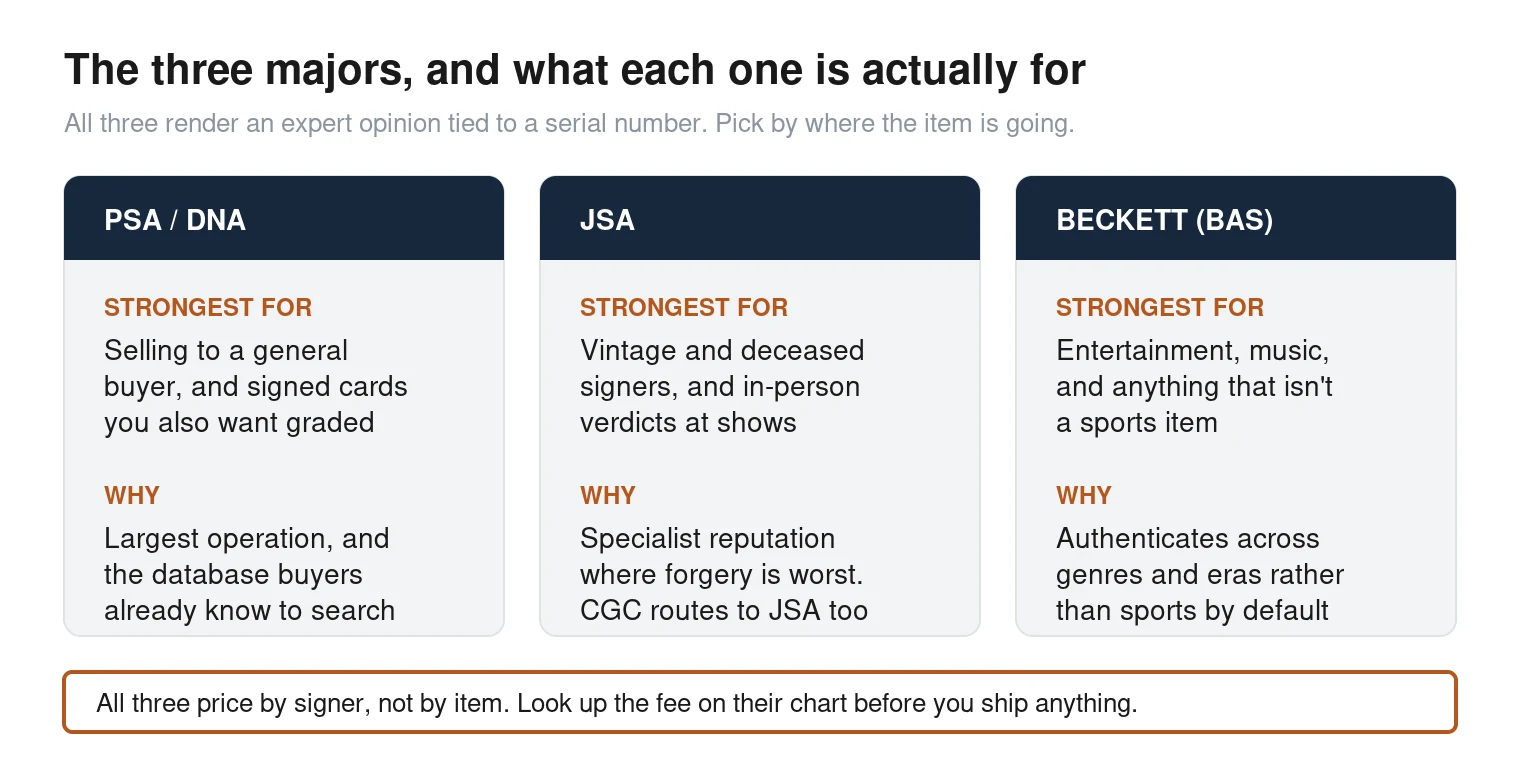
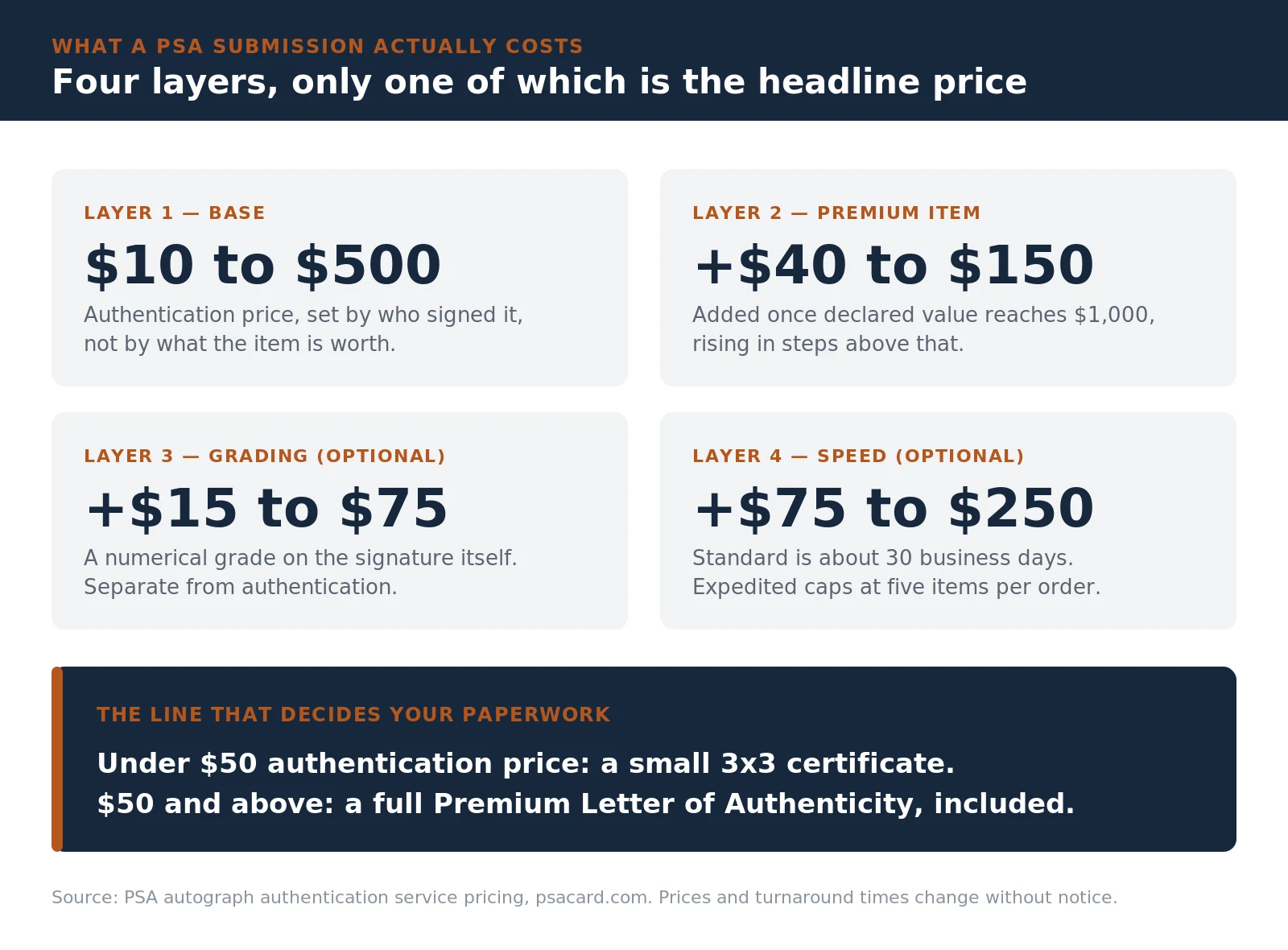
Authentication price is set by the signer, not by your item’s value. A common signature costs $10. A premier signature costs $500. Two autographs on the same baseball can sit at opposite ends of that range.
Here is the structure from PSA’s autograph pricing page, pulled fresh:
- Single-signed items run from $10 to $500 depending on the signer’s tier
- Multi-signed items price off the premier signer, so a 22-signature item topped by a $20 name lands at $150 rather than 22 separate charges
- Anything with a declared value of $1,000 or more adds a premium item charge, starting at $40 and rising to $150 and beyond
- Autograph grading, which puts a numerical condition grade on the signature itself, is an add-on of $15, $25, or $50 on top of authentication
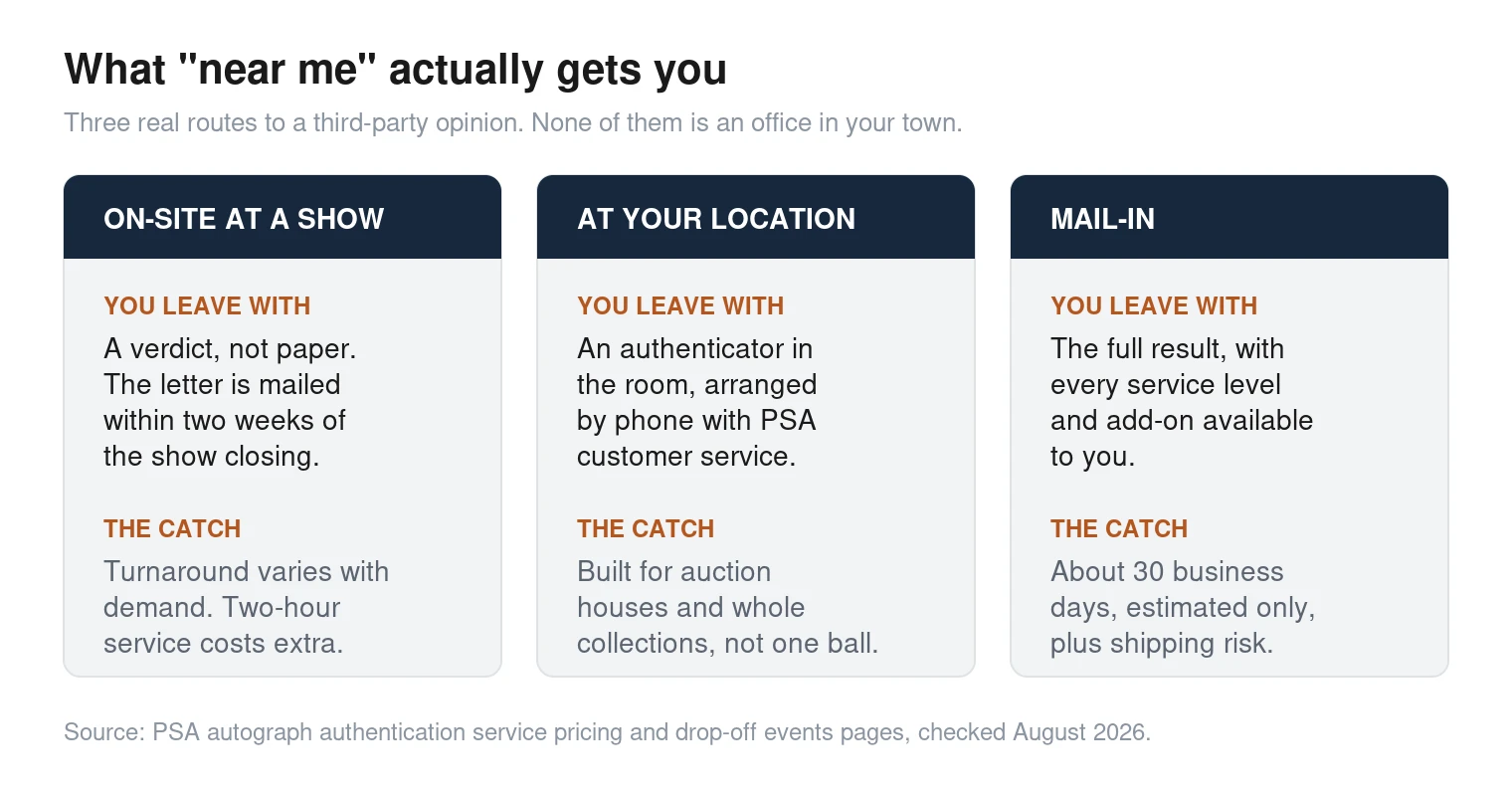
Standard turnaround is roughly 30 business days from the day the order is scanned into the facility. Expedited service exists at $75 for ten business days, $150 for five, and $250 for one, each capped at five items per order.
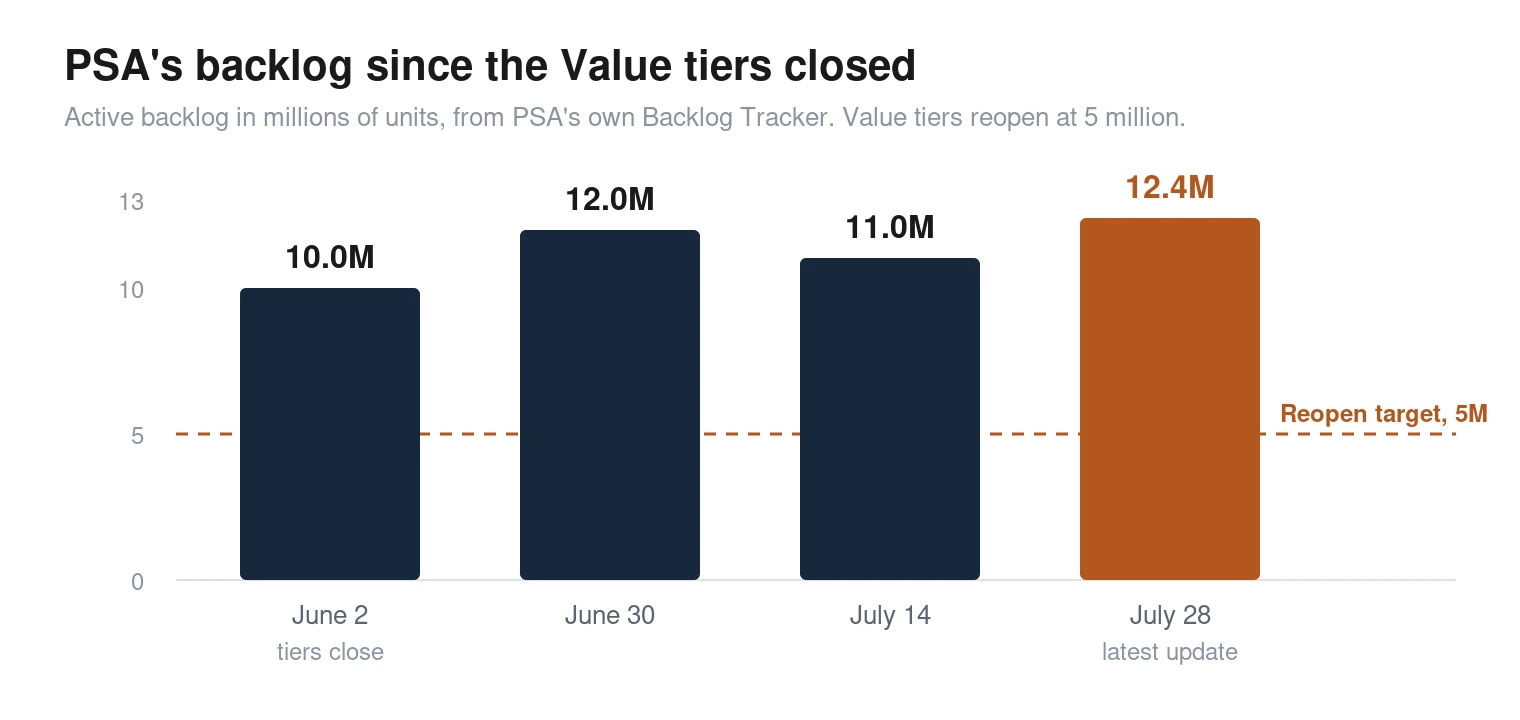
Every figure here came off PSA’s pricing page in August 2026. PSA states plainly that pricing, services, and processing times can change as demand shifts, and it has paused service levels outright during heavy periods. Check the live page before you write a check.
The $50 line nobody warns you about
This is the single most useful number in PSA’s pricing, and it is buried in a footnote.
If your item’s authentication price comes in under $50, you get a small 3×3 certificate of authenticity. A card. That is it.
If your item’s authentication price is $50 or above, you automatically get a full Premium Letter of Authenticity at no extra charge.
The gap between those two documents matters when you go to sell. A letter carries more weight with buyers and auction houses than a wallet-sized card does. Upgrading a sub-$50 item to a full letter costs an additional $15, and lost or missing certificates and letters are replaceable at $15 each.
So an item authenticating at $45 and an item authenticating at $50 are five dollars apart in cost and a meaningful distance apart in what you can show a buyer. Worth knowing before you pick a service level, not after.
Encapsulation makes you give something up
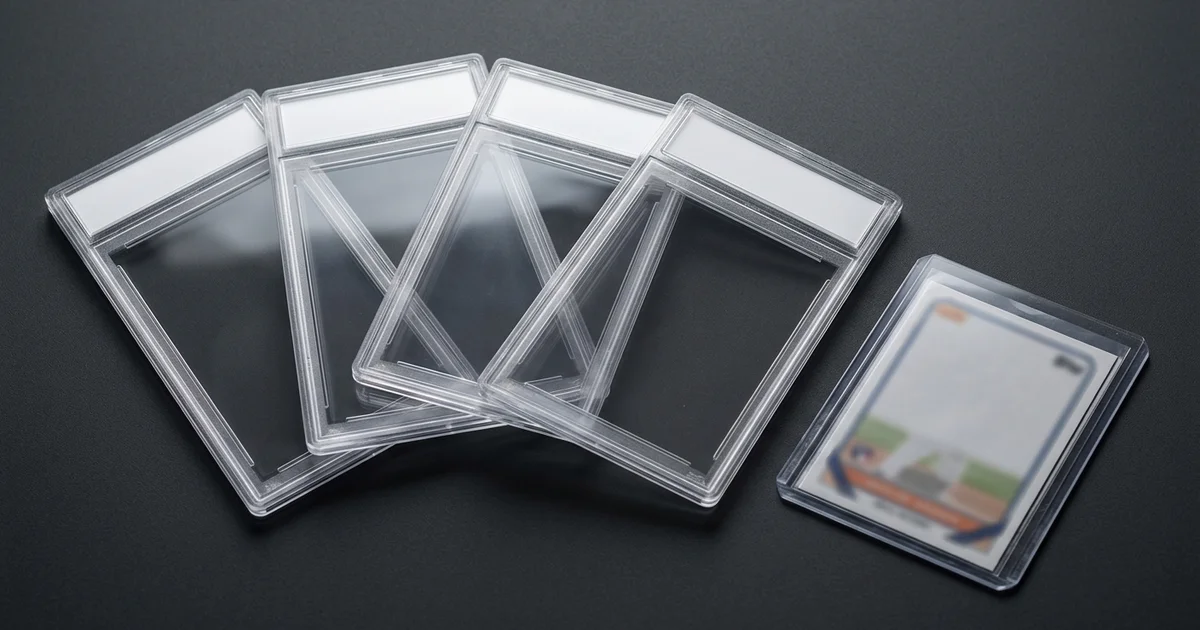
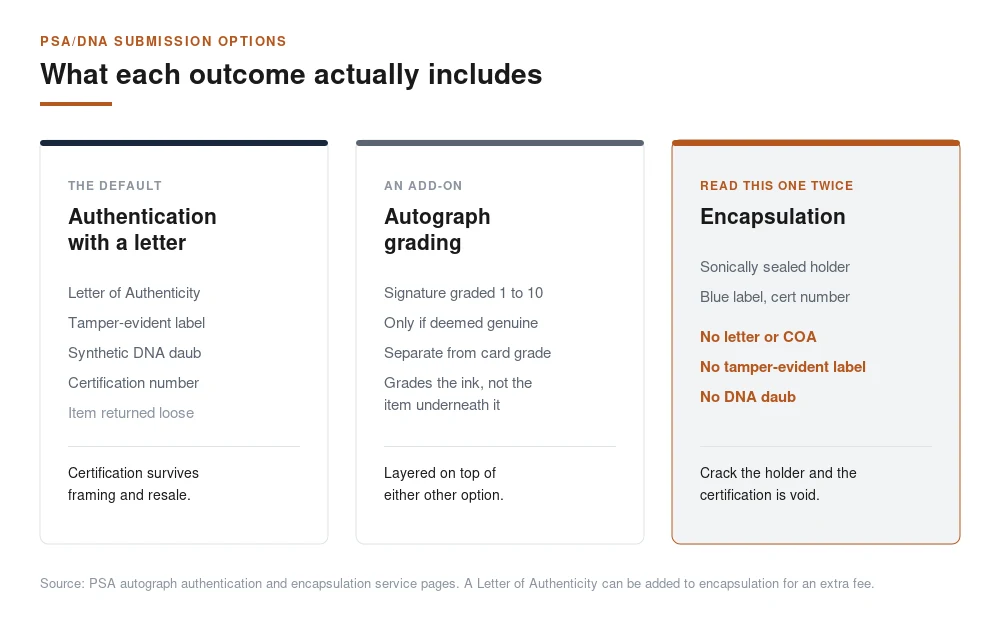
PSA will seal an authenticated card, photo, check, index card, postcard, or cut signature into a sonically sealed tamper-evident holder. It looks great and it protects the item.
It also costs you three things at once. Per PSA’s terms, choosing encapsulation means forgoing the certificate or premium letter, forgoing the PSA/DNA tamper-evident label, and forgoing the DNA daub. You can add a Premium Letter back for $15, but you are otherwise trading paperwork for plastic.
For a card you intend to display or resell in a slab, that trade is fine. The holder is the documentation. For a signed item where the letter is what a future buyer will want to see, think twice. Encapsulation also has to be submitted on its own form as a separate order, with its own shipping charge.
Is PSA authentication legit
Yes, with the qualification that “legit” and “infallible” are different words.
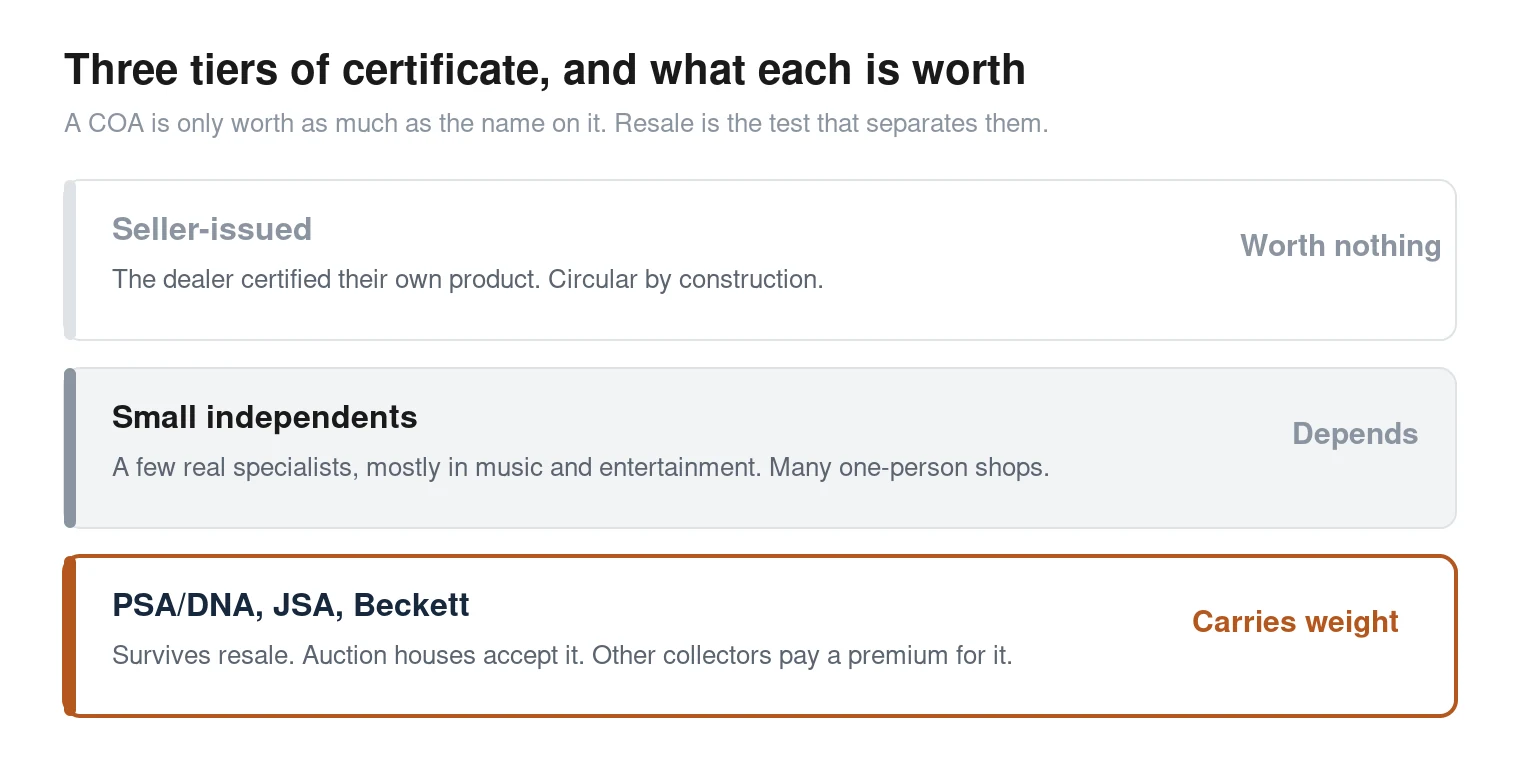
PSA is the largest autograph authenticator in the hobby, it backs its opinions with a financial guarantee, and its cert database is public and free to search at psacard.com/cert. Those three facts are why PSA/DNA stickers and letters carry real resale weight while a dealer’s own certificate of authenticity often carries almost none.
The honest criticisms are worth hearing too. Authenticators disagree with each other, PSA included, and an item rejected by one company sometimes passes at another. Turnaround times move around with demand, and PSA has periodically paused service levels outright when volume outruns capacity. Neither of those makes the service illegitimate. They make it a service with real constraints, which is different from the marketing.
The comparison worth running is against Beckett and JSA, not against some imaginary perfect standard.
Verify before you buy, always
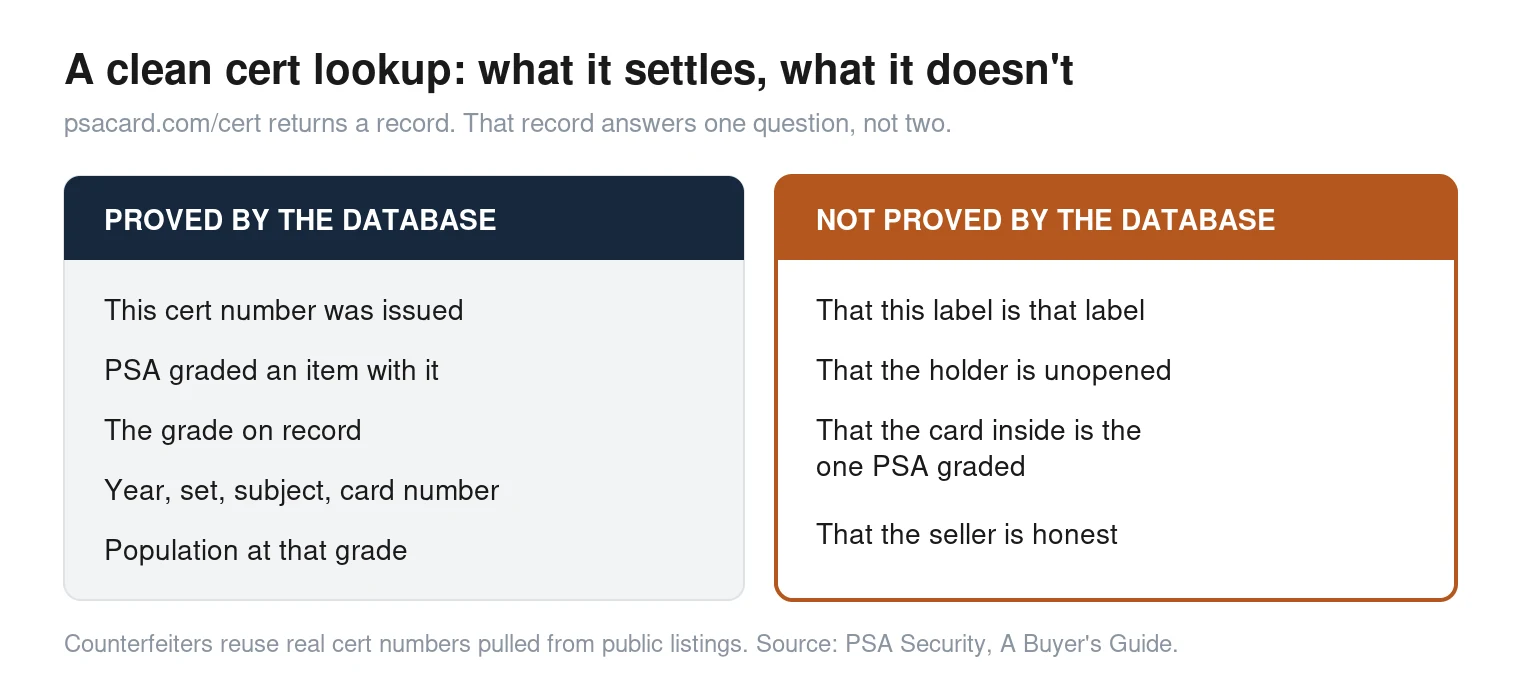
A PSA sticker on an item you are buying proves nothing until you check the number.
Type the cert number into PSA’s cert verification page. It is free, no account needed, and it returns PSA’s record for that number. Then compare the record to the item in front of you. Same signer, same item type, same description.
The failure mode is a real cert number pulled from a genuine item and applied to a fake one. The number verifies. The record does not match the item. That is why “the cert checks out” is only half a verification, and it is the half most buyers stop at.
Screen it yourself before you spend the money
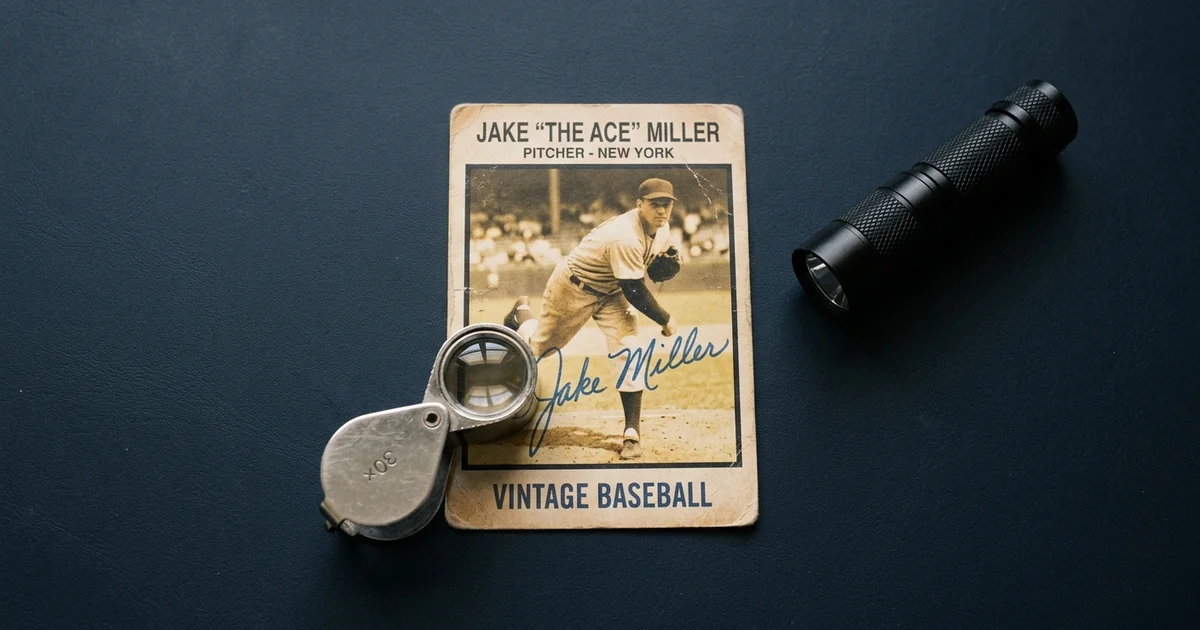
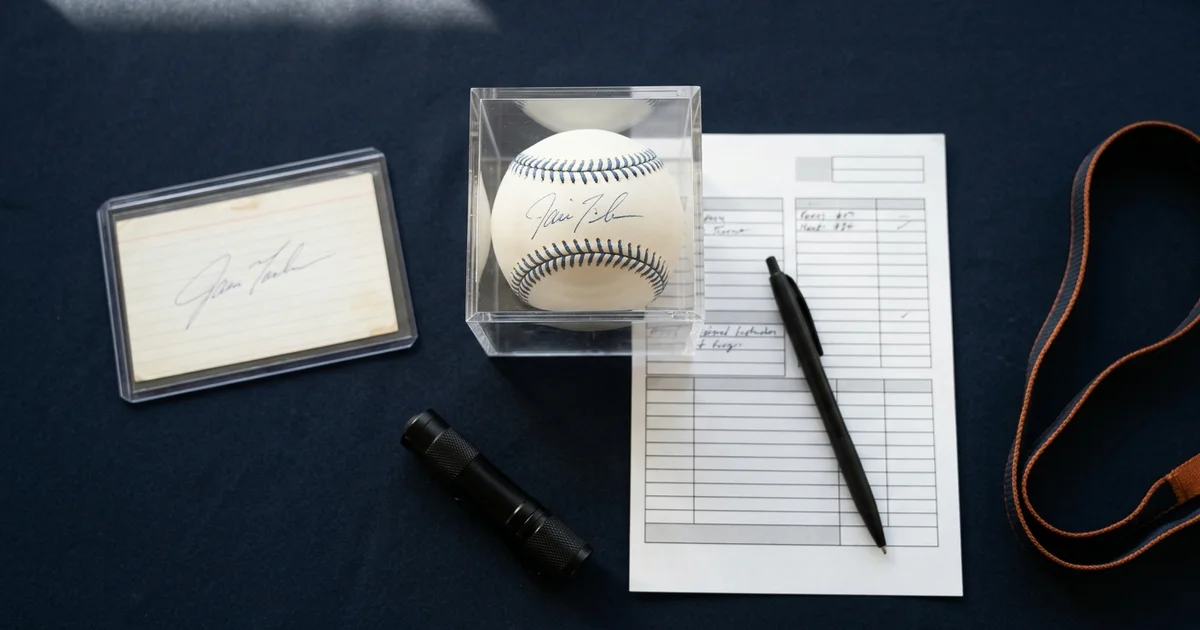
Authentication plus return shipping on a single item can run $40 or more before you learn anything. On items you already suspect, a first pass at your own desk is cheaper than a rejection letter.
Two tools do most of that work.
For Reading the Ink Itself

Nikon 10x Jewelry Triplet Loupe
- 10x triplet optic, which is the magnification that shows ink pooling and stroke starts without losing the whole signature
- 13mm lens, 1.65″ long retracted, so it lives in a pocket at a show instead of a drawer at home
- Swing-out case protects the glass, which matters more than it sounds on a lens you carry loose
What’s good: the triplet lens is corrected for color fringing and edge distortion, which is exactly what you want when you are judging whether an ink edge is feathered or clean. Nikon’s optics are the reason to buy this one over a generic loupe.
What’s not: it is expensive for what it is, several times the price of a serviceable 10x loupe that will show you most of the same things. The focusing distance is short enough that you are working with your eye close to the item, which is awkward on a framed or cased piece. And a loupe tells you about ink and paper, not about whether the signature belongs to the person named. Buy it for screening, not for verdicts. Full detail on technique is in the guide on what a loupe reveals on a forged signature.
For Spotting Added Ink and Restoration

ALONEFIRE SV003 10W 365nm UV Flashlight
- True 365nm longwave output, which is the wavelength that makes added ink and recolored areas separate from original material
- Filtered black lens cuts the visible purple spill that makes cheap blacklights useless for reading a surface
- USB rechargeable with charger and battery included, aluminum body for heat dissipation on longer sessions
What’s good: 365nm with a real filter is the correct specification for this job, and this one delivers it at a price where owning one is an easy call for anyone buying signed items regularly.
What’s not: it is marketed for pet urine and scorpions, not collectibles, so the listing gives you no guidance on collectible use and the beam is hot enough to demand sensible exposure limits. Prolonged UV on a signature is its own risk, which is covered in the piece on longwave versus shortwave safety. Short looks, not long stares. It also reads restoration and added material, not authenticity, so a signature that fluoresces evenly is still an unanswered question.
Packaging a card submission correctly
If what you are sending is a signed card, packaging is not a detail. PSA’s shipping guide specifies a semi-rigid holder at 3 5/16″ by 4 7/8″ for standard cards, and the wrong holder slows your order down.
For Shipping Cards to PSA

Cardboard Gold Card Saver 1 (100 ct)
- Matches PSA’s stated 3 5/16″ x 4 7/8″ submission dimension, lip included
- Slightly oversized around the card so a sleeved card loads and unloads without force
- Also takes the larger pre-1957 cards that will not fit a standard 3″ x 4″ holder
What’s good: it is the holder graders built their handling around, and at 100 count the per-card cost is trivial against a submission fee.
What’s not: it is floppy in a way that surprises anyone used to toploaders, the lip creases if you are careless, and Amazon stock on it moves. At the time of writing the listing showed limited quantity, so check availability rather than assuming. The size that makes it right for PSA also makes it wrong for most storage boxes, which is the whole reason Card Saver 2 exists.
Frequently asked questions
How do I verify PSA authenticity? Enter the cert number at psacard.com/cert, free and without an account, then confirm the returned record actually describes the item in your hands. A matching number on a mismatched description is the fraud pattern to watch for.
How much does PSA charge to authenticate? Single signatures run $10 to $500 based on the signer. Add a premium item charge if declared value hits $1,000, add $15 to $50 if you want autograph grading, and add $75 to $250 if you want it back faster than 30 business days.
Can I verify my PSA item online? Yes. The cert lookup is public and free, and PSA also runs a mobile app that does the same lookup.
Is the PSA certificate lookup free? It is. Any site charging you to check a PSA cert number is charging for something PSA gives away.
What types of items does PSA authenticate? Autographs across sports, entertainment, history, and music, plus original photographs, professional model bats, professional model gloves, and memorabilia. Cards go through grading rather than autograph authentication unless the card is signed.
What I would actually do
Send it in when the signature is worth meaningfully more with a cert than without, and when you have already screened it well enough to think it will pass. Below roughly $75 in resale value, authentication plus shipping eats the difference.
Before it ships, decide whether you want the letter or the slab, because encapsulation quietly takes the paperwork away. And if the authentication price lands in the $40s, price out the $15 letter upgrade before you commit. That is the cheapest meaningful decision in the whole process and almost nobody makes it deliberately.
Related guides
- Best UV Flashlight for Spotting Fake Autographs and Card Restoration (start here)
- Facsimile Autograph: How to Spot a Printed Signature
- Autograph Authentication Near Me- The Honest Answer
- PSA DNA Authentication – What You Actually Get
- Beckett Authentication: What a BAS Sticker Actually Proves
- Autograph Authentication Services: Who to Use and Cost
- PSA Cert Verification: How to Check a Cert Number
- What an Autograph Certificate of Authenticity Is Actually Worth
- Longwave vs. Shortwave UV: Which One Is Safe to Use on Autographs Over and Over
- What a Jeweler’s Loupe Reveals on a Forged Signature
- Reading a UV Light Result: Original Ink vs. Restoration