
As an Amazon Associate we earn from qualifying purchases. This post contains affiliate links, and we may earn a commission at no extra cost to you.
Most of the argument online treats these as rivals. They aren’t. A card saver is a submission tool and a toploader is a storage tool, and once you sort out which job you’re doing, the answer stops being a debate and starts being obvious.
The confusion is understandable. They’re both flat plastic sleeves that cost pennies, they sit next to each other on the same shelf at the card shop, and both of them will technically hold a card. But put a card in the wrong one and you either delay a grading submission by weeks or leave a card rattling loose in a box for three years.
What they actually do differently
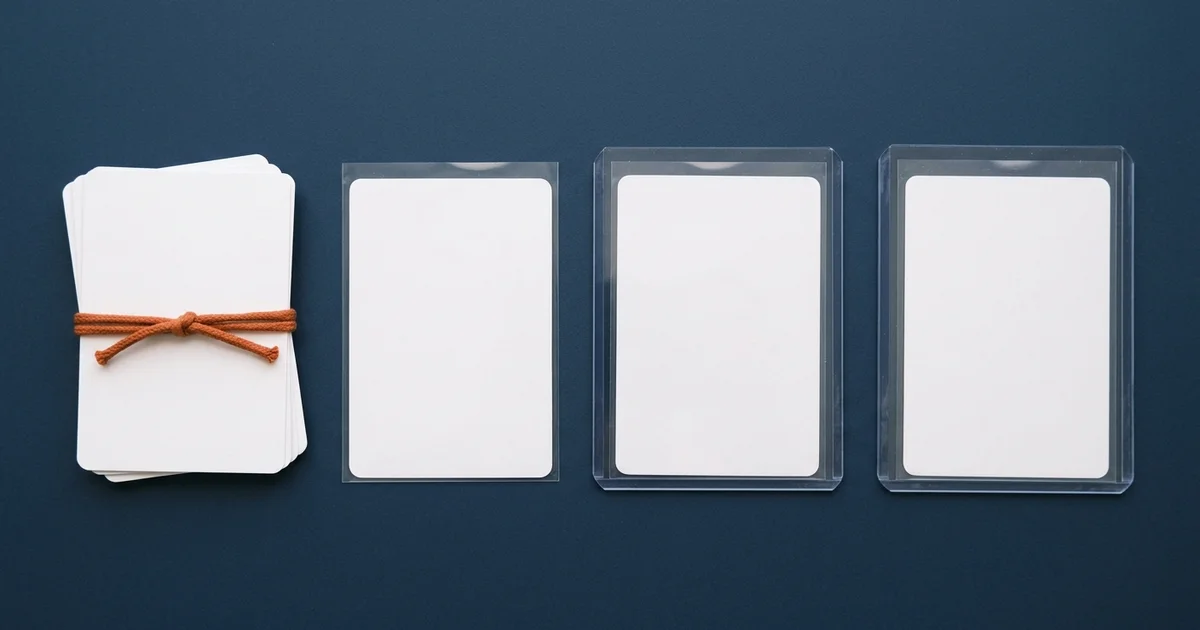
A toploader is rigid. Hard PVC, closed on three sides, and it does not flex. Drop a boxed toploader on a hard floor and the card inside is fine. That rigidity is the entire point of the product.
A card saver is semi-rigid on purpose. It’s thin polypropylene with a half-inch lip at the opening, and it bends. You can flex one between two fingers without any effort at all. That sounds like a downside until you understand who it’s built for: a grader who has to slide hundreds of cards out of holders per shift without touching the card surface. A rigid holder means prying. A semi-rigid one means the card walks out under thumb pressure.
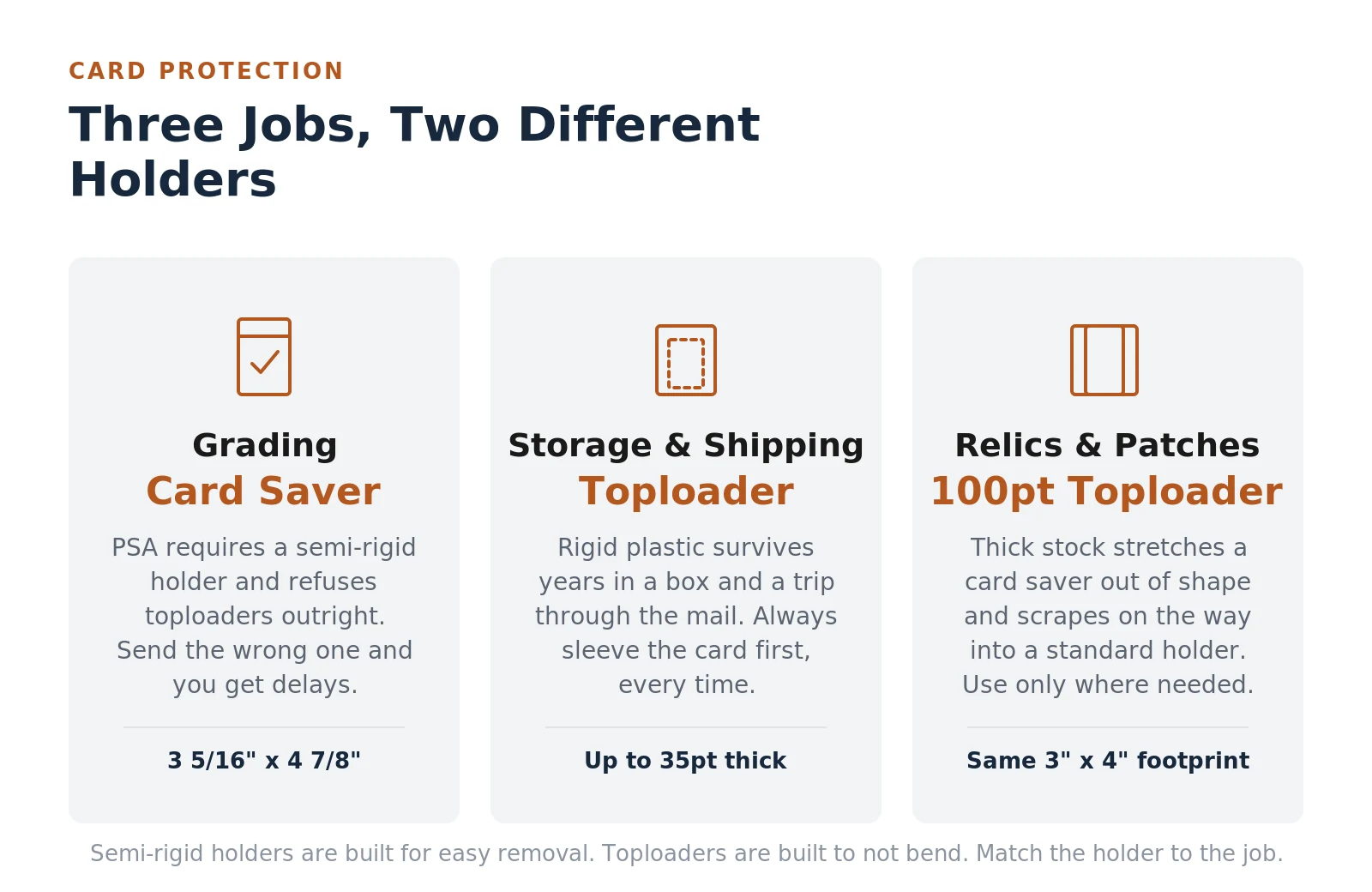
Card Saver 1s run 3 5/16″ by 4 7/8″, noticeably taller than the 3″ by 4″ of a standard toploader. That extra length is what gives you the lip to grab.
If you’re submitting for grading, this isn’t a choice
PSA’s shipping guide is unambiguous. Sleeve each card in a clear penny sleeve, slide it into a semi-rigid holder, and do not use toploaders. They also spell out the dimension: semi-rigid holders for standard trading cards have to be 3 5/16″ x 4 7/8″, which is the Card Saver 1 spec exactly.
Send toploaders anyway and two things happen. Your submission gets pulled aside and processed slower, and the toploaders don’t come back. You’ve paid for grading and thrown away a stack of holders to make a point nobody asked you to make.
There’s a practical reason underneath the policy, not just a preference. Graders handle enormous volume, and every card that has to be worked out of a stiff holder is a chance to touch a corner or scrape a surface. A card that slides out cleanly is a card that keeps its grade. The rule protects your card more than it protects PSA.
Beckett and SGC land in the same place for the same reason. If your card is going anywhere for grading, the holder question is already settled.
For Grading Submissions

Cardboard Gold Card Saver 1 (100 ct)
- 3 5/16″ x 4 7/8″ with a 1/2″ lip, matching PSA’s stated submission dimension
- Acid-free semi-rigid polypropylene, slightly oversized for clean insertion and removal
- Fits the larger pre-1957 cards that won’t go into a standard 3″ x 4″ holder
What’s good: it’s the holder the grading companies designed their process around, it’s cheap per unit at 100 count, and the acid-free polypropylene won’t yellow or leach onto a card the way old vinyl pages did.
What’s not: these are genuinely flimsy, and that’s not a manufacturing complaint, it’s the design. The lip creases if you’re careless, a bent card saver can put pressure on a corner, and a card will slide right back out if the stack isn’t banded properly. They’re also a poor fit for anything thick. Try a jersey patch card in one and you’ll stretch the holder permanently. Treat them as a consumable for submissions, not as storage.
For everything that isn’t a submission, use a toploader
Here’s where most collectors get it backwards. They buy card savers because PSA uses them, decide card savers must therefore be the better holder, and store their whole collection in bendy plastic.
A card sitting in a box for years needs the opposite of easy removal. It needs rigidity, corner protection, and something that survives being shuffled through by hand a hundred times. That’s a toploader, and it isn’t close.
Shipping is the same story. A card saver inside a bubble mailer is one careless sorting machine away from a bent corner. A toploader (sleeved card inside, taped at the top, sandwiched between two pieces of cardboard) is what actually arrives intact. The only exception is a card going to a grader, where you follow their rules instead.
For Storage and Shipping
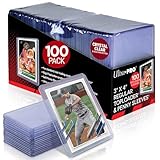
Ultra Pro Regular Toploaders + Penny Sleeves (100 pk)
- Rigid 3″ x 4″ holders for standard 2.5″ x 3.5″ cards up to 35pt thick
- Comes with the soft inner sleeves, so you’re not buying the second half separately
- Ultra Pro has been making these since 1952, and the tolerances are consistent pack to pack
What’s good: buying the toploaders and sleeves together removes the most common mistake in card storage, which is skipping the sleeve. The 35pt rating covers the overwhelming majority of modern base and insert cards.
What’s not: 35pt is a real ceiling, and thick cards will not go in no matter how much you want them to. Forcing one scrapes the card edge on the way in, which is exactly the damage you bought the holder to prevent. The clear plastic also scuffs over years of handling, so a toploader you’ve pulled in and out of a box since 2019 looks it. They’re cheap for a reason. Replace them rather than babying them.
The thick card problem, which is where people actually get burned
Relic cards, patch autos, thick-stock inserts, anything with a swatch or a chunk of bat in it. These blow past 35pt fast, and both a standard toploader and a card saver are the wrong tool.
The card saver stretches out and stops holding its shape. The regular toploader either won’t accept the card or scrapes it going in. You need a thicker toploader rated for the stock, and this is one of the few places where buying the specific product genuinely matters instead of making do.
For Relics, Patches, and Thick Stock

Ultra Pro Super Thick 100PT Toploaders (25 ct)
- Rated to 100pt, which covers most relic, patch, and thick-stock cards
- Same 3″ x 4″ outer footprint, so it still fits standard storage boxes and rows
- Rigid enough to protect a heavy card that a semi-rigid holder can’t support
What’s good: it solves a problem nothing else on this list solves, and it does it without changing the outer dimensions, so your box organization stays intact.
What’s not: put a normal 20pt card in one and it rattles. Loose movement inside a holder is its own slow damage, especially at the corners, and it defeats the purpose entirely. These are single-purpose. Buy a small count, use them only for cards that need them, and don’t let them become your default because they feel sturdier.
The sleeve underneath matters more than the holder
The most common storage mistake isn’t picking the wrong holder. It’s putting a bare card directly into plastic.
Toploader plastic is harder than card stock. Sliding a raw card in and out grinds microscopic wear into the surface and edges, and after enough repetitions that’s a visible difference on a grading scale where surface is one of four subgrades. A penny sleeve costs a fraction of a cent and eliminates the problem completely.
Two details worth getting right. Use clear sleeves, not colored or opaque ones, since PSA calls those out as a source of processing delays. And load the card into the sleeve, then load the sleeved card into the holder. Never try to slide a card into a sleeve that’s already inside a toploader.
What I’d actually buy
If you’re grading, buy card savers. Not because they’re better holders, but because they’re the required ones, and the requirement exists for a reason that benefits your card.
If you’re storing or shipping, buy toploaders with sleeves included and stop thinking about it. Add a small pack of 100pt toploaders for the handful of thick cards in your collection, which is probably fewer than you think.
The wrong move is picking one and using it for everything. That’s how a submission gets delayed and a shoebox of cards develops soft corners at the same time.
Once the holder is sorted, the next thing that quietly ruins cards is the air around them. Humidity works differently on cards than it does on jerseys, and a sealed storage box needs a completely different approach than a hanging display.