
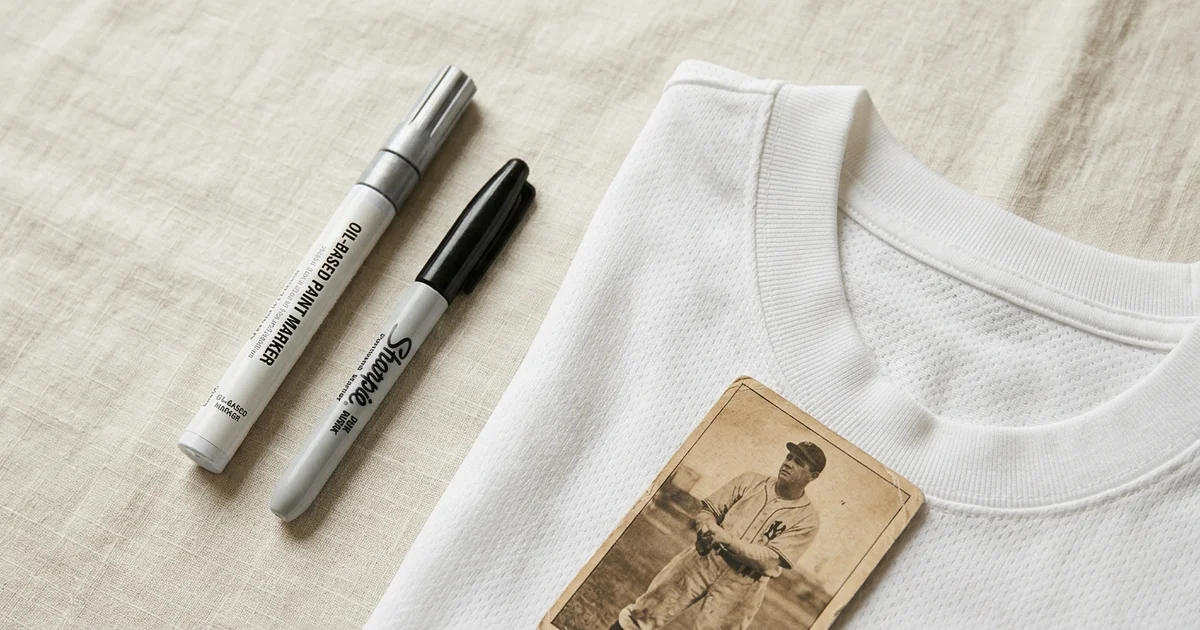
Ask ten collectors which pen to use for an autograph and you’ll get ten different answers, half of them wrong for the item actually in front of you. Two pens dominate the debate: the oil-based paint pen and the classic Sharpie permanent marker. They’re not interchangeable, and picking the wrong one can cost you a signature that fades, bleeds, or smears before the ink even sets.
As an Amazon Associate we earn from qualifying purchases. This post contains affiliate links, and we may earn a commission at no extra cost to you.
One thing first: if you’re signing a baseball specifically, skip both of these. A blue ballpoint is the right call there, paint pens can smudge on a ball’s leather and Sharpies bleed into it. This comparison is for everything else, jerseys, bats, helmets, photos, plastic display pieces, anything with a flat or semi-flat surface.
The quick comparison

The paint pen
The Uchida DecoColor Fine Point Paint Marker is the one that shows up on autograph dealer tables more than any other brand, and there’s a real reason for that. The pigment is oil-based and acid-free, so it doesn’t yellow or fade the way dye-based ink does over a decade in a display case. It goes on opaque, which matters on a dark jersey or a black helmet where a Sharpie’s ink barely shows.
None of that comes free. The pen needs a shake and a few presses on scratch paper before it flows right, and if the person signing rushes, the paint can’t keep up, you’ll get a streaky, thin line instead of a clean one. It’s also a few dollars more than a Sharpie, and if you’re buying a full set of colors, that adds up fast.
Pros: archival pigment, opaque on dark surfaces, holds up for years without fading.
Cons: needs priming before every signing, unforgiving with a fast signer, pricier per pen.
Our Pick

Uchida DecoColor Fine Point Paint Marker
- Oil-based, acid-free pigment, won’t yellow in a display case
- Opaque on dark jerseys and helmets where a Sharpie barely shows
- Needs a shake and priming, not an instant-write pen
The Sharpie
The Sharpie Permanent Marker, Fine Point is the one everyone already has a drawer full of, and for photos and smooth cards, that’s genuinely fine. It writes instantly, no priming, no shaking, no waiting for the ink to catch up with a fast signer at a crowded table.
The tradeoff shows up years later, not on signing day. Sharpie ink fades under light over time, and on porous surfaces like certain jersey fabrics, it can feather or bleed slightly instead of sitting crisp on top. It’s also nowhere near as visible on dark materials, a black Sharpie on a navy jersey is asking for trouble.
Pros: instant dry time, no prep needed, cheap, easy for any signer.
Cons: fades over years of light exposure, can bleed on porous fabric, weak visibility on dark surfaces.
Also Great
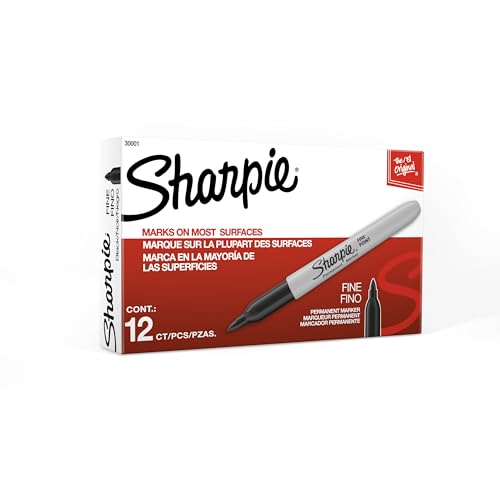
Sharpie Permanent Marker, Fine Point (12-pack)
- Dries instantly, zero prep before signing
- Best for photos, cards, and smooth paper
- Skip it for dark jerseys or long-term display pieces
What about hats, Funko Pops, and other odd surfaces?
Jerseys and photos get all the attention, but collectors sign plenty else. A Funko Pop’s vinyl is smooth and non-porous, closer to a photo than a jersey, so either pen writes cleanly, but the paint pen’s opaque pigment sits up on top and resists rubbing off during handling far better than a Sharpie line does. A ball cap is the trickier case: it’s curved, textured, and often dark, the same combination that makes jerseys hard. Same rule applies, paint pen for a dark cap, Sharpie is fine on a light one you’re not planning to display long-term.
The material rule holds across all of it: smooth and light-colored favors the Sharpie’s speed, dark or textured favors the paint pen’s opacity and staying power. When in doubt, test the pen on an inconspicuous spot first, a pump or a tag, not the signature itself.
Why do autographs actually fade?
Light does the damage, not age by itself. UV exposure and even ordinary room light break down dye-based pigments over years, which is the real reason a Sharpie signature on a jersey hanging near a window looks noticeably weaker after a decade while one kept out of direct light barely changes. Collectors comparing notes on forums like collectSPACE have been flagging the same pattern for years: it’s not the pen alone, it’s what happens to the piece after the ink dries.
Two things help regardless of which pen you used. Keep the piece out of direct sunlight, and if it’s going in a display case, use UV-filtering acrylic or glass rather than the plain kind. Neither costs much next to what a graded, framed piece is worth, and both matter more to long-term fading than the few dollars separating a paint pen from a Sharpie.

Which one to actually buy
If the item is going in a display case for the next twenty years, jersey, bat, helmet, use the paint pen. The extra few dollars and the slower prep are worth it for ink that won’t fade before your kid inherits the thing.
If it’s a photo, a card, or you’re at a signing where the athlete is moving fast and there’s no time for priming a pen, the Sharpie is the better call. It’s not the archival choice, but it’s the realistic one when speed matters more than permanence.
Bottom line
Buy both. Keep a Sharpie in the bag for photos and quick signings. Keep a paint pen for anything going into long-term display. The pen that “always works” for autographs doesn’t exist, the right pen depends entirely on what you’re putting in front of the person signing it.
Leave a Reply