Tag: hub

  • Best Display Case for a Signed Football: 3 That Actually Protect It

    Best Display Case for a Signed Football: 3 That Actually Protect It

    A signed football doesn’t fade because someone touched it. It fades because it sat under a window, or a lamp, or three years of ordinary daylight, inside a case that never actually blocked UV in the first place. Most “display cases” on Amazon are just clear plastic boxes. Only some of them do the one job that matters: keep the ink dark and the leather from yellowing for the next twenty years, not the next two.

    As an Amazon Associate we earn from qualifying purchases. This post contains affiliate links, and we may earn a commission at no extra cost to you.

    We looked at nine cases built specifically for a full-size football (not jersey shadow boxes with a football afterthought) and checked which ones are actually in stock right now, not just listed. Three made the cut across three different budgets. Here’s how they stack up.

    The three worth buying, side by side

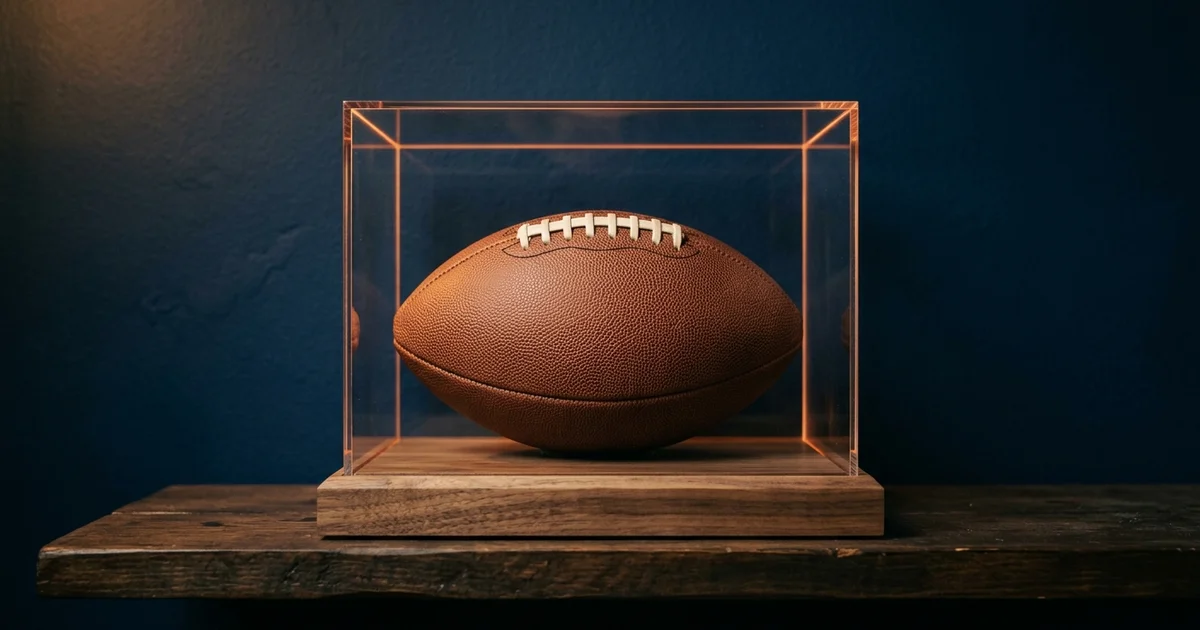
    Three football display case tiers compared: budget FEMELI, best overall JupDec, premium Balldome
    Case Best for Base Assembly Price range
    FEMELI Budget Acrylic cradle Required $
    JupDec Best overall Acacia wood None $$
    Balldome Premium / custom label Acrylic None $$$

    If you only read one section, make it this one: get the JupDec unless you have a specific reason not to. It’s the only one of the three that pairs a real wood base with zero assembly, and that combination is rarer than it should be at this price.

    What actually matters in a football display case

    Three things separate a case that protects a ball from one that just holds it up. UV-filtering acrylic is the first, and it’s not optional. Ultraviolet light breaks down the molecular bonds in ink and leather, which is the actual mechanism behind fading, not just a marketing phrase printed on the box. Conservation-grade UV filtering blocks at least 97% of UV rays, and every case on this list claims 98% or better. Claims aren’t the same as delivery, but a 98% claim from a real manufacturer is a meaningfully different product than a case with no UV language at all.

    Second: the base. Acrylic bases scratch, and scratched acrylic under a spotlight looks cheap fast. Wood bases don’t have that problem, and they photograph better if you’re ever reselling the ball. Third: assembly. “No assembly required” on these listings usually means the dome or cube lifts straight off the base. Actual multi-piece assembly, screws included, is a real time cost and a real risk of a crooked seam that lets dust in.

    FEMELI Football Display Case, the budget pick

    This is the cheapest case here that isn’t a gamble. The cube and cradle design fits any regulation football, and the acrylic is genuinely clear, not the slightly cloudy stuff some budget cases ship with.

    • Fits youth through full-size footballs
    • Black base makes autographs stand out
    • Lowest price of the three

    The real con: stock is genuinely thin on this one right now, and cheap acrylic cases like this one tend to come and go on Amazon without warning. If it’s out of stock when you check, that’s not a listing error, it’s the actual product cycle for cases at this price. Assembly is also required, which the wood-base pick below skips entirely.

    Budget Pick

    FEMELI Football Display Case

    FEMELI Football Display Case

    • Fits youth through full-size regulation footballs
    • Clear acrylic cube with black display cradle
    • Most affordable option on this list
    Check current price on Amazon

    JupDec Football Display Case, the one to actually buy

    The acacia wood base is what earns this the top spot. It’s sturdier than an acrylic base, it doesn’t scratch the same way, and it reads as a real display piece instead of a storage box with a lid. Setup is four wooden dowels and a cover, no tools.

    • Real wood base, not acrylic
    • No assembly, no screws
    • Fits full-size regulation footballs

    The con here is straightforward: it costs roughly double the FEMELI, and if all you want is a football off your desk and behind plastic, that gap won’t feel worth it. For anything you’d actually call a display piece, wood over acrylic is the right trade.

    Best Overall

    JupDec Football Display Case with wood base

    JupDec Football Display Case

    • Real acacia wood base, not acrylic
    • Zero assembly, cover lifts straight on
    • Fits full-size regulation footballs
    Check current price on Amazon

    Balldome Custom Label Case, if the ball itself is the story

    This one does something the other two don’t: a full-color printed label that goes into the base, with the player’s name, the date, the score, whatever the moment was. It’s built for a ball that has a specific story attached, a senior night gift, a championship game ball, a first touchdown keepsake, not a generic “nice signature” display.

    • Custom full-color label included, no engraving fee
    • Snap-lock dome, no separate pedestal
    • UV-protected acrylic, won’t yellow

    The con is real, not softened: this is nearly four times the FEMELI’s price, and it skips the wood base that makes the JupDec feel substantial. You’re paying for the label and the dome mechanism, not for materials that beat the cheaper options. Worth it if the ball earns a label. Not worth it for a ball you just want protected.

    Premium Pick

    Balldome custom label football display case

    Balldome Custom Label Display Case

    • Full-color custom label included at checkout
    • Snap-lock acrylic dome, no separate pedestal
    • UV-protected acrylic resists yellowing
    Check current price on Amazon

    Is a signed football actually worth protecting like this?

    Depends on the signature, not the ball. A football signed by a Hall of Famer or tied to a specific game holds real value, and professional authentication is what actually protects that value on paper. A display case protects the physical object. Neither one substitutes for the other. If the ball was never authenticated and the signature isn’t documented, a good case still matters, just for sentimental reasons instead of resale ones.

    Why UV protection isn’t a nice-to-have

    Sunlight through a window is worse than most people expect. Ultraviolet wavelengths break down ink pigment and leather dye at the molecular level, doing more damage over a year than ordinary heat ever will, and conservation standards exist because that fading is invisible day to day and obvious after a year. A case sitting in direct sun with no UV filtering will fade a signature faster than one in a dim room with no case at all. Position matters as much as the case itself. Keep it off a windowsill regardless of which one you buy.

    Three real options, three real trade-offs. Cheap and functional, wood and no-assembly, or custom label and priced for it. Pick the one that matches what the ball actually means to you, not the one with the most features listed.
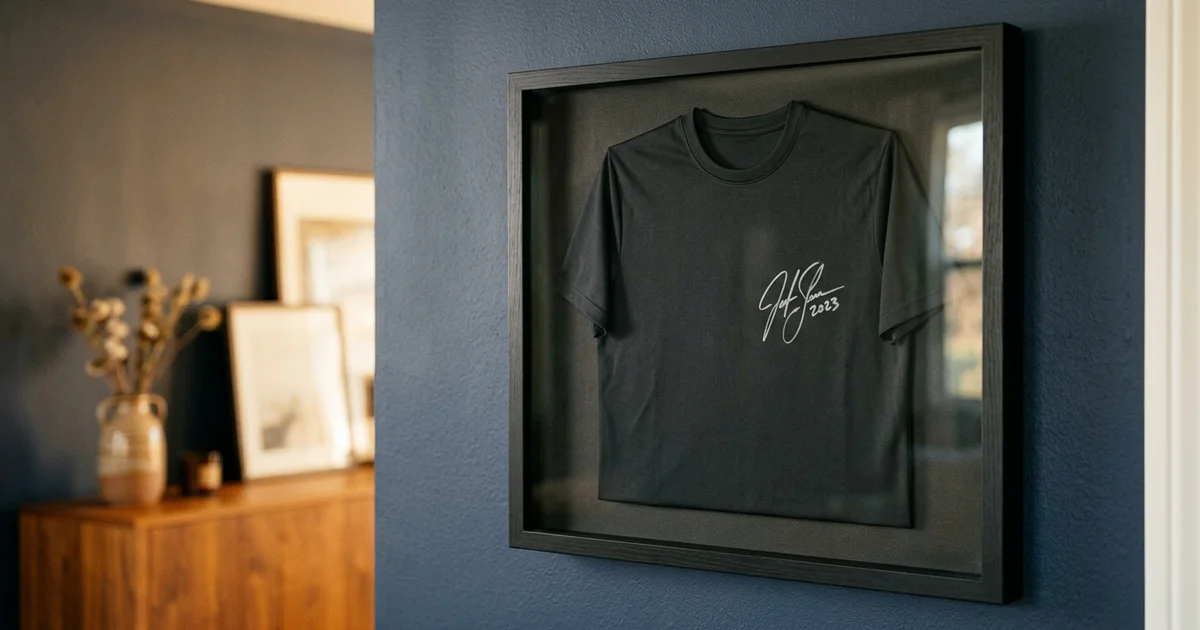
     

  • How to Display a Signed Jersey Without Ruining the Signature

    How to Display a Signed Jersey Without Ruining the Signature

    A signed jersey is the kind of thing people mean to frame “eventually” and then don’t. It sits folded in a closet for two years, or worse, gets thumbtacked straight to drywall like a dorm-room poster. Both are a good way to end up with a faded, creased, or torn piece of memorabilia instead of the one you paid for.

    As an Amazon Associate we earn from qualifying purchases. This post contains affiliate links, and we may earn a commission at no extra cost to you.

    The short answer is a shadow box display case with UV-protective acrylic, not a regular picture frame and not a thumbtack. Here’s why that specific combination matters, and which cases actually deliver on it.

    Why a regular frame doesn’t work

    A jersey has depth. Stitching, numbers, a folded collar, sometimes a signature sitting right on a seam. Press that under flat glass in a normal frame and you’re crushing fabric that wants room to breathe, which shows up later as permanent creasing across the numbers.

    A shadow box solves this by building in an air gap, usually an inch or more, between the backing and the glass. The jersey hangs or pins flat without getting squeezed. That’s the whole reason “jersey frame” and “picture frame” aren’t interchangeable searches, even though they look similar in a thumbnail.

    The second piece is UV protection. Untreated acrylic or glass lets ordinary window light degrade both the jersey’s colors and the ink underneath a signature over years, the same fading mechanism that shows up in autographed baseballs and photos. A case rated for 98% UV blocking stops most of that before it starts.

    The three cases worth actually buying

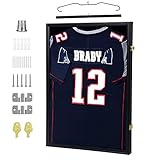
    Comparison of three jersey shadow box display cases: Grintus budget pick, IHEIPYE best overall pick, and an aluminum premium case with photo slots

    Best budget pick

    Best Value

    Grintus Jersey Display Frame Case

    Grintus Jersey Display Frame Case

    • Matt black wood frame, UV-protective acrylic door
    • Three display methods: wood hanger, metal hanger, pin board
    • Two anti-theft locks included
    Check current price on Amazon

    This is the one to buy if you just want the jersey protected and off the closet floor, nothing fancier. The build is plain black wood, not a design piece for the wall, but the acrylic and lock hardware are the same core protection as the pricier options. Assembly is straightforward, and the pin board option handles a long-sleeve hockey or football jersey without wrinkling it the way a single hanger would.

    Pros: cheapest of the three, still has real UV-rated acrylic, three ways to mount the jersey.
    Cons: plain finish, no photo or nameplate space, locks are basic and won’t stop a determined thief.

    Best overall

    Our Pick

    IHEIPYE Jersey Display Frame Case

    IHEIPYE Jersey Display Frame Case

    • Shatterproof, high-transparency UV acrylic, felt-lined interior
    • Wood hanger, metal hanger, and pin board, three fitting options
    • Gold-plated anti-theft locks
    Check current price on Amazon

    This is the one most people should buy. Same 31.25″ x 23.25″ footprint as the budget pick, but the felt lining is a nicer touch against the fabric, and the two hanger styles plus a pin board cover basketball, football, and hockey jerseys without needing a different case for each. The locks feel more solid, gold-plated instead of the base hardware on the cheaper option.

    Pros: felt-lined interior, three mounting styles fit almost any jersey shape, nicer lock hardware than the budget pick.
    Cons: still no photo or nameplate slot if you want a fuller display, black finish only.

    Best for a full display

    Premium Pick

    Aluminum Jersey Display Frame Case with photo slots

    Aluminum Jersey Display Frame Case (with Photo Slots)

    • Aluminum frame construction, museum-grade acrylic glazing
    • Built-in slots for two photos and a nameplate
    • 98% UV-protective, fits sizes S through 2XL
    Check current price on Amazon

    Buy this one if the jersey is the center of a bigger display, not the whole thing. The aluminum frame reads as more finished on a wall than the wood cases, and the two photo slots plus a nameplate space mean you can pair the jersey with a game photo and a name or date instead of showing the jersey alone. That’s the difference between “a jersey in a box” and something that actually tells a story on the wall.

    Pros: aluminum frame looks more finished, photo and nameplate slots add real context, still full UV protection.
    Cons: priciest of the three, deeper profile takes up more wall depth, overkill if you just want the jersey protected.

    Mounting mistakes that ruin a signature

    Direct sunlight is the big one. Even a case rated for 98% UV blocking is fighting a losing battle if it hangs across from a south-facing window all day, every day. Put it on an interior wall, or at minimum out of a direct sun path, and the case does the job it’s designed for instead of just slowing down the same fade.

    Don’t skip the pin board for anything with sleeves. A hanger alone lets a long-sleeve jersey sag and wrinkle at the shoulders over months, right where a signature often sits. The pin board holds the fabric flat the way a hanger can’t.

    And if the signature sits on or near a seam, mount it so the seam runs with the frame’s grain rather than fighting the fold. It sounds like a small detail. It’s the difference between a signature you can still read clearly in five years and one that’s cracked along a crease line.

    Bottom line

    Skip the thumbtacks and skip a regular picture frame. Get a shadow box built for a jersey, with real UV-rated acrylic, and pick the size of display that matches what you actually want on the wall: bare-bones protection, a nicer everyday case, or a full photo-and-nameplate display. Any of the three above beats another year folded in a drawer.

  • Paint Pen vs. Sharpie for Autographs: Which One Actually Holds Up?

    Paint Pen vs. Sharpie for Autographs: Which One Actually Holds Up?

    Ask ten collectors which pen to use for an autograph and you’ll get ten different answers, half of them wrong for the item actually in front of you. Two pens dominate the debate: the oil-based paint pen and the classic Sharpie permanent marker. They’re not interchangeable, and picking the wrong one can cost you a signature that fades, bleeds, or smears before the ink even sets.

    As an Amazon Associate we earn from qualifying purchases. This post contains affiliate links, and we may earn a commission at no extra cost to you.

    One thing first: if you’re signing a baseball specifically, skip both of these. A blue ballpoint is the right call there, paint pens can smudge on a ball’s leather and Sharpies bleed into it. This comparison is for everything else, jerseys, bats, helmets, photos, plastic display pieces, anything with a flat or semi-flat surface.

    The quick comparison

    Full comparison of paint pen vs Sharpie for signing memorabilia: best surfaces, fade resistance, dry time, line control, and cost

    The paint pen

    The Uchida DecoColor Fine Point Paint Marker is the one that shows up on autograph dealer tables more than any other brand, and there’s a real reason for that. The pigment is oil-based and acid-free, so it doesn’t yellow or fade the way dye-based ink does over a decade in a display case. It goes on opaque, which matters on a dark jersey or a black helmet where a Sharpie’s ink barely shows.

    None of that comes free. The pen needs a shake and a few presses on scratch paper before it flows right, and if the person signing rushes, the paint can’t keep up, you’ll get a streaky, thin line instead of a clean one. It’s also a few dollars more than a Sharpie, and if you’re buying a full set of colors, that adds up fast.

    Pros: archival pigment, opaque on dark surfaces, holds up for years without fading.
    Cons: needs priming before every signing, unforgiving with a fast signer, pricier per pen.

    Our Pick

    Uchida DecoColor Fine Point Paint Marker

    Uchida DecoColor Fine Point Paint Marker

    • Oil-based, acid-free pigment, won’t yellow in a display case
    • Opaque on dark jerseys and helmets where a Sharpie barely shows
    • Needs a shake and priming, not an instant-write pen
    Check current price on Amazon

    The Sharpie

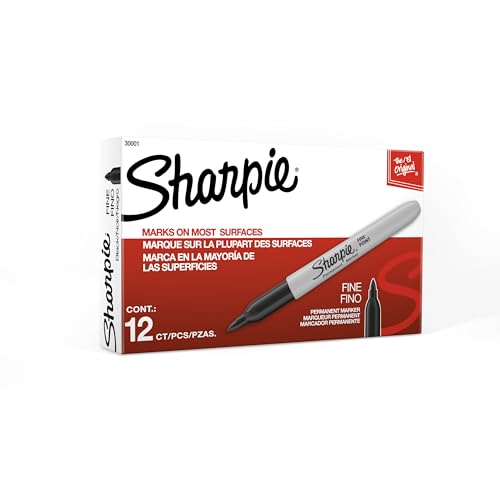
    The Sharpie Permanent Marker, Fine Point is the one everyone already has a drawer full of, and for photos and smooth cards, that’s genuinely fine. It writes instantly, no priming, no shaking, no waiting for the ink to catch up with a fast signer at a crowded table.

    The tradeoff shows up years later, not on signing day. Sharpie ink fades under light over time, and on porous surfaces like certain jersey fabrics, it can feather or bleed slightly instead of sitting crisp on top. It’s also nowhere near as visible on dark materials, a black Sharpie on a navy jersey is asking for trouble.

    Pros: instant dry time, no prep needed, cheap, easy for any signer.
    Cons: fades over years of light exposure, can bleed on porous fabric, weak visibility on dark surfaces.

    Also Great

    Sharpie Permanent Marker 12-pack, Fine Point

    Sharpie Permanent Marker, Fine Point (12-pack)

    • Dries instantly, zero prep before signing
    • Best for photos, cards, and smooth paper
    • Skip it for dark jerseys or long-term display pieces
    Check current price on Amazon

    What about hats, Funko Pops, and other odd surfaces?

    Jerseys and photos get all the attention, but collectors sign plenty else. A Funko Pop’s vinyl is smooth and non-porous, closer to a photo than a jersey, so either pen writes cleanly, but the paint pen’s opaque pigment sits up on top and resists rubbing off during handling far better than a Sharpie line does. A ball cap is the trickier case: it’s curved, textured, and often dark, the same combination that makes jerseys hard. Same rule applies, paint pen for a dark cap, Sharpie is fine on a light one you’re not planning to display long-term.

    The material rule holds across all of it: smooth and light-colored favors the Sharpie’s speed, dark or textured favors the paint pen’s opacity and staying power. When in doubt, test the pen on an inconspicuous spot first, a pump or a tag, not the signature itself.

    Why do autographs actually fade?

    Light does the damage, not age by itself. UV exposure and even ordinary room light break down dye-based pigments over years, which is the real reason a Sharpie signature on a jersey hanging near a window looks noticeably weaker after a decade while one kept out of direct light barely changes. Collectors comparing notes on forums like collectSPACE have been flagging the same pattern for years: it’s not the pen alone, it’s what happens to the piece after the ink dries.

    Two things help regardless of which pen you used. Keep the piece out of direct sunlight, and if it’s going in a display case, use UV-filtering acrylic or glass rather than the plain kind. Neither costs much next to what a graded, framed piece is worth, and both matter more to long-term fading than the few dollars separating a paint pen from a Sharpie.

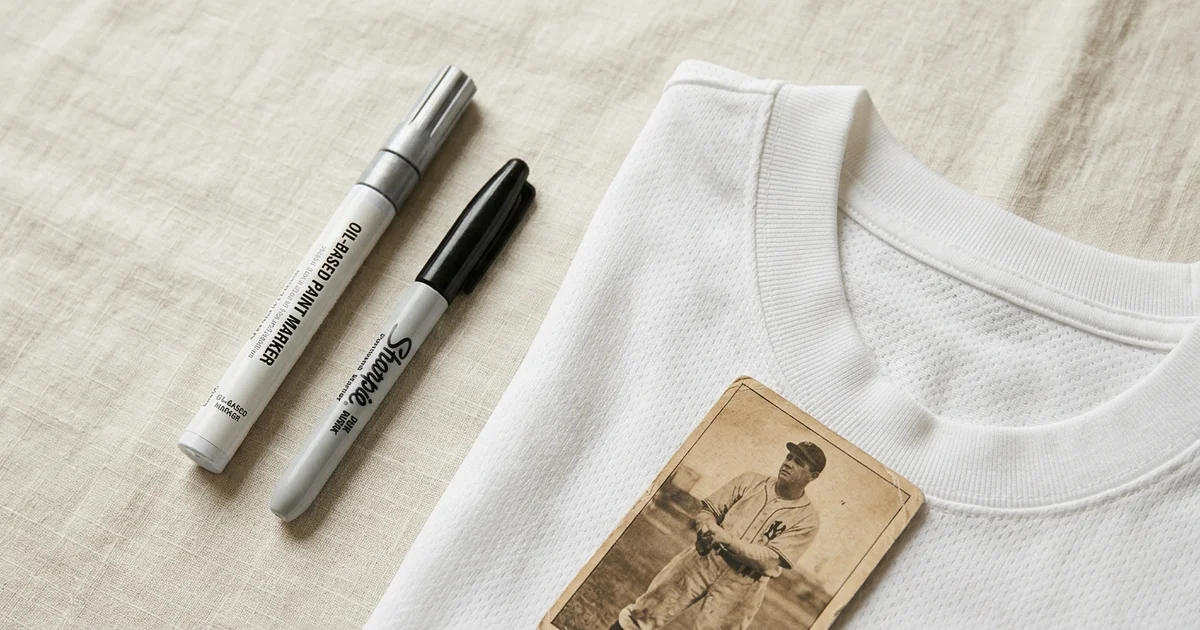
    A vintage signed baseball jersey hanging near a sunlit window, illustrating how light exposure fades ink over time

    Which one to actually buy

    If the item is going in a display case for the next twenty years, jersey, bat, helmet, use the paint pen. The extra few dollars and the slower prep are worth it for ink that won’t fade before your kid inherits the thing.

    If it’s a photo, a card, or you’re at a signing where the athlete is moving fast and there’s no time for priming a pen, the Sharpie is the better call. It’s not the archival choice, but it’s the realistic one when speed matters more than permanence.

    Bottom line

    Buy both. Keep a Sharpie in the bag for photos and quick signings. Keep a paint pen for anything going into long-term display. The pen that “always works” for autographs doesn’t exist, the right pen depends entirely on what you’re putting in front of the person signing it.