
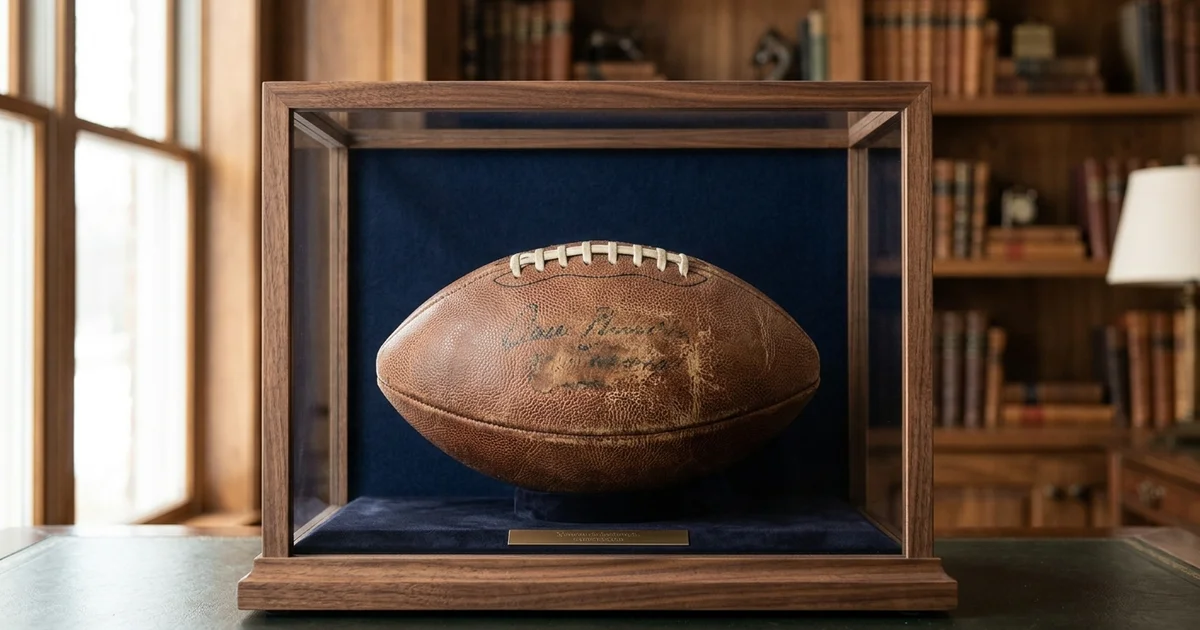
As an Amazon Associate we earn from qualifying purchases. This post contains affiliate links, and we may earn a commission at no extra cost to you.
A game football gets worked constantly. Hands, oil, impact, weather. That’s what keeps the leather from drying out. A signed football does none of that. It sits still on a shelf for years, which sounds safer and mostly isn’t. Stillness is exactly how leather goes brittle and ink goes pale, just slower and quieter than anything that would make you notice in time to stop it.
Fading is what costs you value first
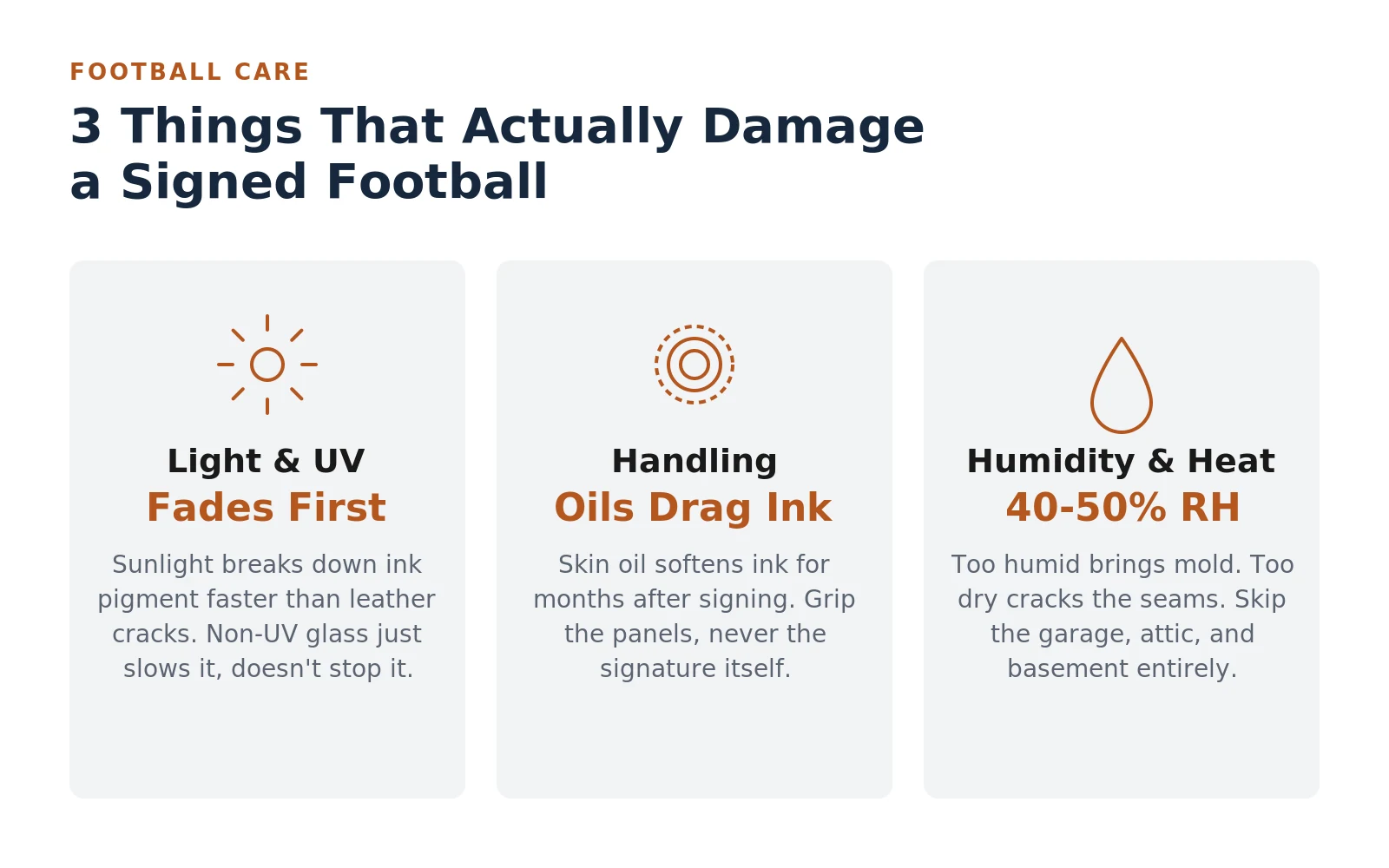
Ink fades before leather visibly cracks, and it’s usually sunlight doing it, not age. UV breaks down pigment whether the ball is in direct sun or just sitting near a bright window all day. A case that isn’t UV-rated acrylic or glass barely slows this down. It just looks like protection.
Placement matters more than most people think. Keep the case off any wall that gets direct sun for part of the day, even a couple hours. Interior walls or anywhere lit only by indoor lighting hold up far better over years. If you already own a case with clear (non-UV) panels, moving it out of direct light does more good than anything you’d buy to fix it after the fact.
Handling it without smudging the signature
Dry hands, always. Oil from skin softens ink over time and can drag it if the surface is touched right after signing. Older autographs (a year or more of cure time) are more stable, but “stable” isn’t “bulletproof.”
Grip the ball by the panels, not across the signature, and support it with two hands rather than pinching it at one end. Cotton gloves get recommended a lot for this kind of thing, and they’re worse here than bare dry hands: fabric can catch and drag on ink that hasn’t fully hardened. Skip them for anything signed in the last year or so.
Should you condition the leather at all
Yes, eventually. Untreated leather left alone for years does dry and crack, same as a baseball glove nobody’s oiled. But this is the one spot where doing it wrong causes the exact damage you’re trying to prevent.
For Leather, Kept Away From the Ink

Pecard Leather Dressing 6 oz
- All-purpose conditioner for oil-tanned, chrome-tanned, and exotic leathers
- Cleans and conditions while adding a light wax coat that repels dust and dirt
- Made for football-grade leather, not a general-purpose furniture or auto product
Good: a small amount goes a long way, and it genuinely keeps the panels supple instead of stiffening up in a case for a decade.
Not great: it’s a wax-based dressing, so repeated use darkens leather slightly over time, which matters if you care about original condition for grading. Apply it with a cloth, never straight from the bottle, and keep it at least an inch from any part of the signature. Test a hidden panel first. This isn’t a product you rub on generously twice a year and forget about.
Humidity and heat do the damage you won’t see coming
Too humid and you get mold or a musty smell that shows up months after the fact, not immediately. Too dry and the leather stiffens and eventually cracks along the seams. Somewhere around 40-50% relative humidity in the room is the target, and a normal, climate-controlled room already gets you most of the way there.
Skip the garage, attic, or basement for storage or display. All three swing further in temperature and humidity than almost anywhere else in a house, and that swing (not a single bad day) is what actually breaks leather down over years.
A UV-rated display case solves the fading problem and the handling problem at the same time, since a ball that’s properly cased doesn’t need to come out and get touched nearly as often.